Walk into almost any modern office across the Gulf and you’ll notice the same thing: laptops everywhere, cloud dashboards open on every screen, and a growing unease about who might be watching. Cybersecurity budgets across the region have exploded over the past few years, yet one of the simplest entry points for attackers is still sitting right under everyone’s fingertips the keyboard. At Advance Tech Qatar, this is a conversation that comes up more and more with clients in banking, government, and healthcare: hardware-level security is no longer optional, and secure keyboards are quietly becoming one of the most practical upgrades an enterprise can make.
The Problem With “Normal” Keyboards
Most people assume a keyboard is just a keyboard. In reality, standard input devices are one of the easiest targets for keystroke logging, whether through malicious firmware, USB-based hardware implants, or compromised drivers. A single keylogger sitting between a keyboard and a computer can quietly capture passwords, financial data, and confidential client communications for months before anyone notices. For sectors like finance, oil and gas, telecom, and government — all of which dominate the GCC’s economic landscape — that kind of exposure isn’t a minor inconvenience. It’s a direct threat to national infrastructure and client trust.
Why the GCC Is Especially at Risk
Countries across the Gulf, including Qatar, the UAE, and Saudi Arabia, have been investing heavily in digital transformation as part of broader national visions like Qatar National Vision 2030 and Saudi Vision 2030. As government services, banking systems, and critical infrastructure move online, the attack surface grows with them. Add to this the region’s high concentration of multinational headquarters, sovereign wealth funds, and energy companies, and you get an environment where a single data breach can have consequences far beyond one organization.
Regulators have taken notice. Data protection frameworks in Qatar and the wider region increasingly expect organizations to demonstrate strong endpoint security, not just software firewalls and antivirus tools. Hardware-level protections, including tamper-resistant and encrypted keyboards, are becoming part of that conversation, especially in industries subject to compliance standards like ISO 27001 or sector-specific banking regulations.
What Makes a Keyboard “Secure”
A secure keyboard isn’t just a rebranded standard one. It typically includes:
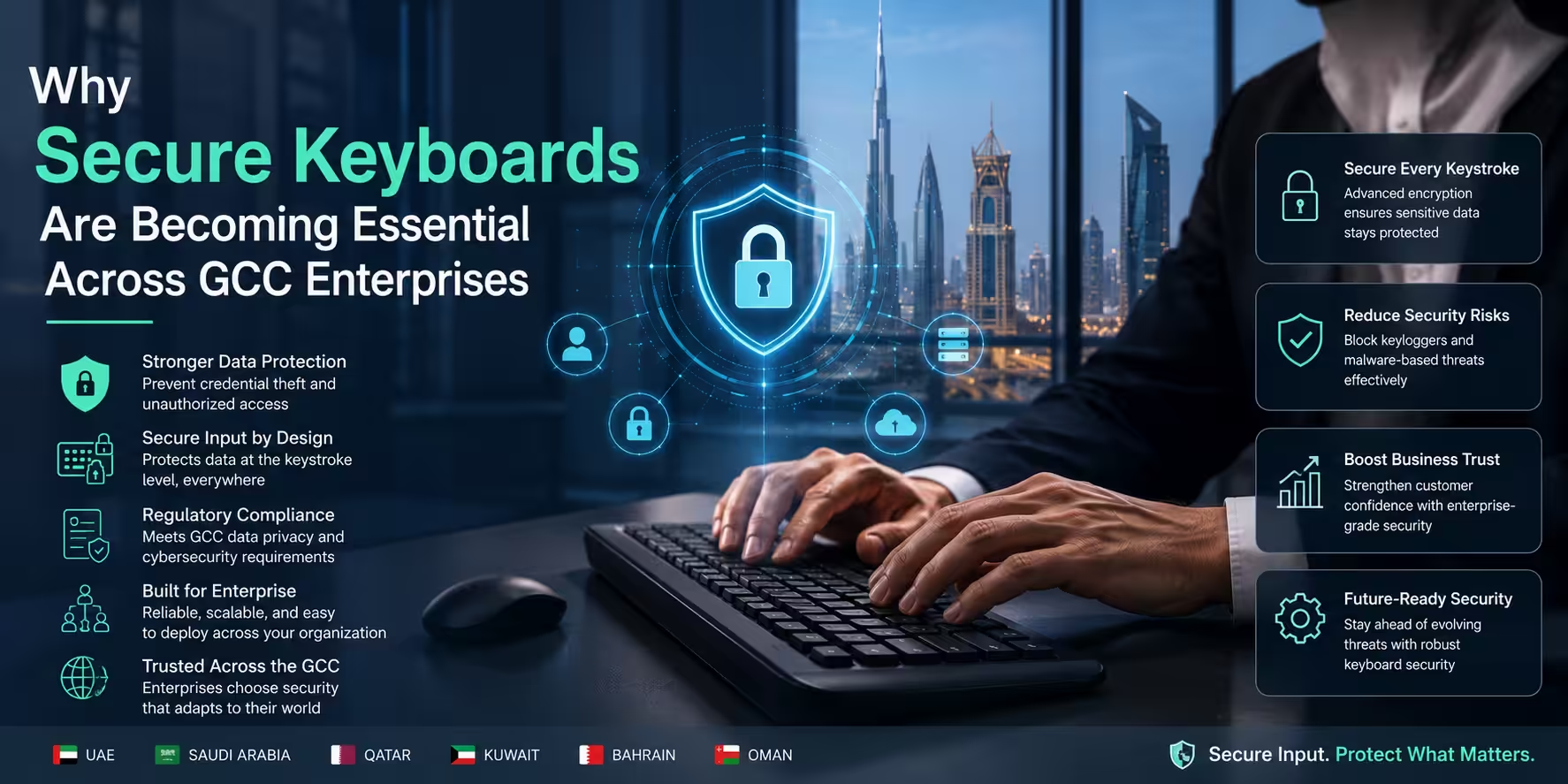
- Encrypted keystroke transmission so data can’t be intercepted between the device and the computer
- Tamper-evident or tamper-resistant hardware casing that makes physical modification obvious or difficult
- Firmware protection to prevent malicious code from being flashed onto the device
- Anti-keylogging design, sometimes combined with randomized scan codes or hardware-level authentication
- Certified build quality, often validated against recognized international security standards
These features matter most in environments where sensitive data changes hands constantly — call centers, government offices, trading floors, and healthcare record systems.
Industries Leading the Shift
Banks and financial institutions across the GCC were among the first to adopt secure input devices, largely because of PCI-DSS compliance requirements and the sheer volume of financial transactions processed daily. Government ministries followed, driven by concerns over espionage and the protection of classified communications. More recently, healthcare providers and large contracting firms have joined the trend, recognizing that patient records and project data are just as attractive to attackers as banking credentials.
Even mid-sized enterprises, which once assumed they were “too small to be targeted,” are rethinking that assumption. Ransomware groups and data brokers don’t discriminate by company size; they look for the easiest way in, and unsecured input devices are exactly that. Brands like KSI keyboards have gained traction locally precisely because they’re built with this layered risk in mind, rather than being retrofitted after the fact.
How to Choose the Secure Keyboards
Selecting the right device isn’t about buying the most expensive option on the shelf. It comes down to matching the keyboard’s capabilities with your actual risk profile. Start by asking a few practical questions:
- What data passes through this workstation? Financial transactions and classified documents demand a higher security tier than a general reception desk.
- Does the device support encrypted communication end to end, not just at the software level?
- Is the hardware tamper-evident, so IT teams can quickly spot physical interference during routine audits?
- Does it integrate with your existing endpoint security and access control systems without requiring a costly overhaul?
- Is the vendor established and reputable, with a track record of supplying to regulated industries in the region?
Enterprises that skip this evaluation often end up either overspending on unnecessary features or, worse, under-protecting critical systems because the keyboard “looked secure enough” on paper.
The Regional Supply Chain Matters Too
Sourcing plays a bigger role in this decision than most procurement teams realize. Devices bought through unverified resellers or gray-market channels carry their own risk — there’s no guarantee the firmware hasn’t already been altered before it even reaches your office. This is why enterprises across Qatar increasingly prefer working with an established local KSI keyboards distributor that can guarantee authentic hardware, proper warranty support, and after-sales servicing. A trusted regional supply chain isn’t just a convenience; it’s part of the security picture itself, since a compromised device can undo every other precaution an IT team has taken.
Looking Ahead
As GCC governments push forward with smart city projects, digital banking expansion, and stricter data protection laws, the demand for hardware-level security tools will only grow. Secure keyboards, once seen as a niche accessory for defense and intelligence agencies, are steadily becoming standard equipment across mainstream enterprise IT setups. Organizations that adopt this mindset early — treating input devices as part of their overall cybersecurity architecture rather than an afterthought — will be better positioned to meet both regulatory expectations and the practical realities of operating in a high-risk digital environment.
The keyboard sitting on your employee’s desk might seem like the least interesting piece of your IT infrastructure. In today’s Gulf business environment, it might also be one of the most important.