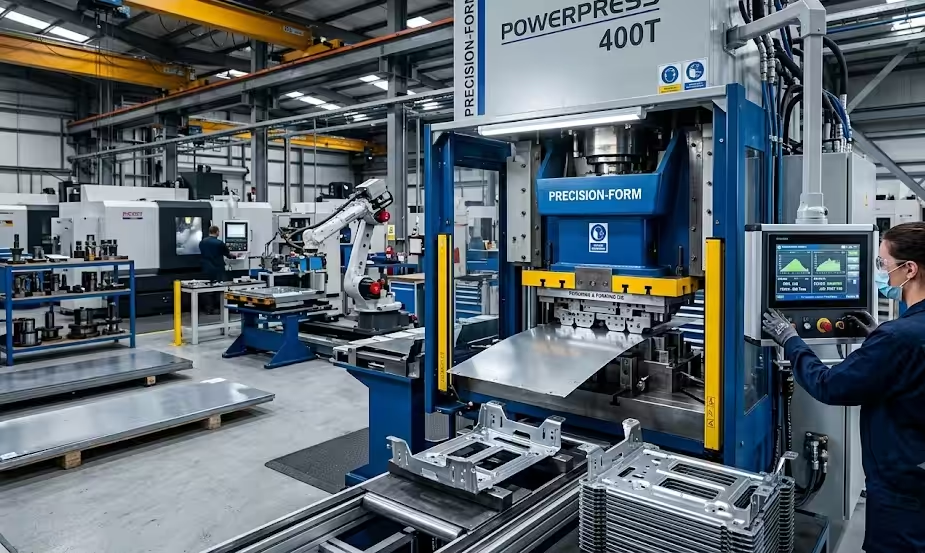
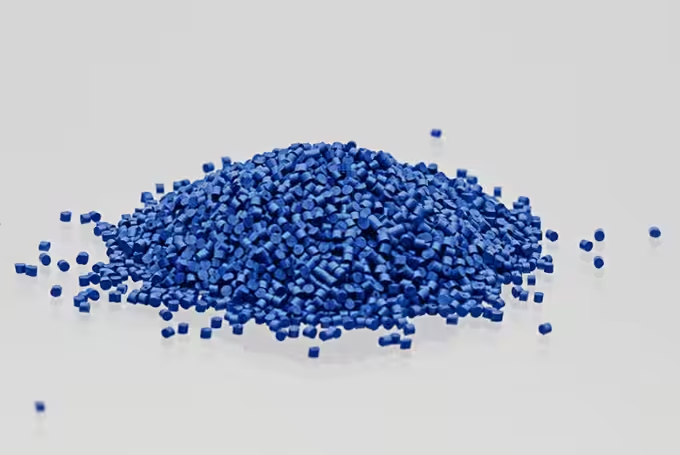
Plastic products rely on color consistency and material behavior to serve everyday needs. The slightest deviation may alter the appearance of the product, its strength, or confidence in the brand. It is here that, in such an environment, a masterbatch factory relies on control rather than chance. Every step in the process is designed to reproduce the same output. Such discipline enables plastics to perform consistently across batches.
- Raw Material Control at the Start: Consistency starts with the tight processing of base polymers and pigments. Materials are tested before use against a check for melt flow, moisture, and purity. Only those who have been approved move further in the line. Storage conditions are kept stable to avoid contamination. Locking quality at entry ensures predictability and ease later in the processing.
- Precision Mixing and Feeding Systems: Accurate dosage control technologies govern the process of mixing pigments with other additives. Automated dosage controllers eliminate human mistakes and ensure accurate ratio control. Mixing equipment is chosen to ensure that pigments and other polymers mix uniformly without damaging the material. This ensures that uniformity equals consistency, avoiding streaks, shading, or weak points in any batch.
- Process Monitoring: Today, factories monitor temperature and speed in real-time. Changes, even slight ones, are immediately highlighted by sensors and software used in the extrusion process. This, in turn, allows for action to be taken before defects are formed. Data about the batch is kept continually, keeping the process stable while reducing waste and rework.
- Testing and Quality Checks after Output: The final product of the masterbatch is subject to testing in terms of colour matching, dispersion, and physical response. The samples are measured against reference samples in specific light conditions. In the event of any deviation, the source of the problem is identified and traced back in order to create even better feedback for future production batches.
- Equipment Design for Stable Output: Machine design can affect the homogeneity of the heat and shear applied. Screws, barrels, and dies are selected based on appropriate formulation. Wear-resistant parts minimize the shift in variability with time. Routine maintenance ensures that equipment behaviour does not change. Stable machines assist in maintaining colour and performance within specified limits.
- Standard Recipes and Batch Records: Every product is made according to a fixed recipe that has been approved through testing. Batch records capture settings, materials, and results for traceability. If issues appear later, the data allows quick comparison. Learning from past runs improves future control. This structure removes the guesswork from daily production work.
- Consistency Driven by System Thinking: The factory functions as one system rather than discrete steps. Changes in one area have consequences in the final result. The links create unexpected variation in knowledge. The focus is on process flow rather than individual tasks. This mindset builds strong foundations in colour and performance stability.
In conclusion, it is the true consistency that permits plastic components to have the same performance in any application or location. It is the discipline at work in the background each day that makes this particular approach also offer support for specialist products, including marble effect masterbatch, without compromising the stability or colour balance. It is the same consistency in both colour, strength, and processing that helps manufacturers have confidence and control over their products or products they have manufactured.