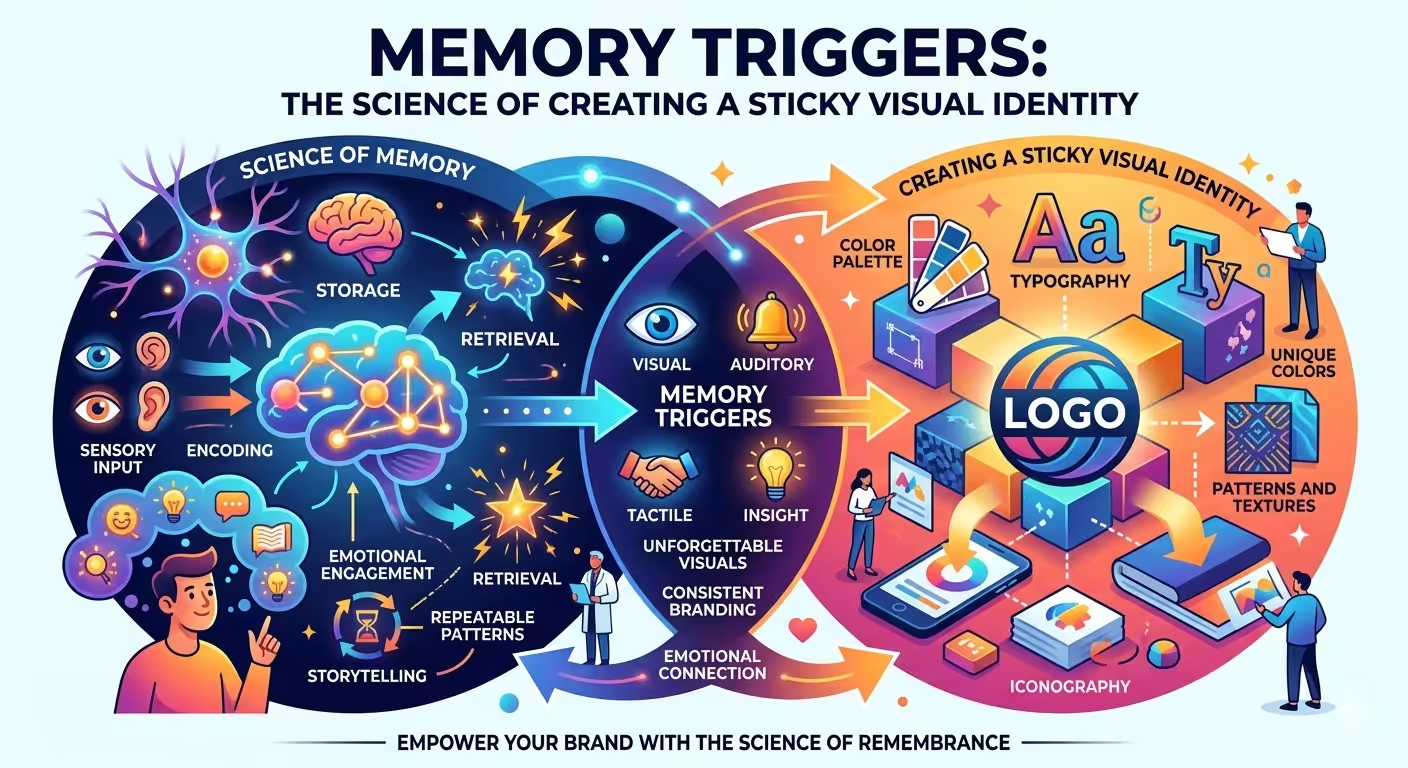
In the hyper-accelerated digital landscape of 2026, the battle for consumer attention has been replaced by a much harder fight: the battle for memory. Research suggests that the average person is bombarded with upwards of 10,000 brand messages daily. Amidst this visual white noise, most brands are forgotten within seconds of a scroll. To survive, a brand must move beyond being “seen” and aim to be “encoded.”
Creating a “sticky” visual identity is no longer a matter of artistic intuition; it is a rigorous application of cognitive science. By understanding how the brain filters, stores, and retrieves visual information, businesses can build “mnemonic anchors” that ensure their brand stays top-of-mind long after the initial interaction.
1. The Cognitive Load & Processing Fluency
The human brain is biologically wired to conserve energy. When it encounters complex, chaotic, or over-designed visuals, it experiences “cognitive load” a mental tax that often leads to the brain simply filtering the information out to save resources.
To create a sticky identity, you must prioritize Processing Fluency. This is the ease with which the brain can understand and categorize a visual stimulus. The higher the fluency, the more “likable” and “trustworthy” the brand feels. This is why many startups in 2026 are moving away from DIY tools and opting for an Online logo design maker that utilizes AI-driven Gestalt principles. These systems are designed to ensure symmetry, closure, and figure-ground clarity, making the logo “easier” for the brain to digest and, consequently, easier to remember.
2. The Power of Color as a Neural Shortcut
Color is the first thing the brain perceives, often before shapes or words. Neuro-branding studies have shown that color can increase brand recognition by up to 80%. This is because color bypasses the analytical part of the brain and speaks directly to the limbic system, which handles emotion and long-term memory.
In the UK market specifically, there is a shifting trend toward “Heritage Tones”—deep greens, burnt oranges, and “toasty” neutrals that signal stability in an era of rapid change. When a business leverages professional uk logo design services, they aren’t just buying a graphic; they are investing in a strategic color palette that acts as a psychological shortcut. A consistent use of a unique hue across all touchpoints creates a “Mere Exposure Effect,” where familiarity breeds a subconscious preference.
3. Dual-Coding Theory: Linking Words and Icons
According to Psychologist Allan Paivio’s Dual-Coding Theory, the brain processes information through two parallel systems: one for verbal cues (names and slogans) and one for non-verbal cues (images and symbols). A sticky visual identity creates a bridge between these two.
When a logo successfully connects a visual symbol with a conceptual meaning—think of the hidden arrow in FedEx or the “smile” under Amazon it becomes doubly memorable. If the consumer forgets the name, the symbol triggers the memory; if they forget the symbol, the name brings it back. This “dual-pathway” to memory is what transforms a simple business into a household name.
4. Digital Stickiness: The Role of the Interface
In 2026, a brand’s visual identity is rarely static. It lives on screens, adjusts to dark modes, and breathes in motion. If the logo is the “anchor,” the website is the “environment” where the memory is solidified.
This is where the expertise of Professional Website Designers becomes a mechanical necessity. Stickiness on the web is built through “Micro-Interactions,” the subtle animations when a button is hovered over, the way a page scrolls, and the “Peak-End Rule.” The Peak-End Rule suggests that humans judge an experience based on its most intense point and its end. A website that is fast, accessible, and provides a delightful “finish” (like a creative “Thank You” animation after a purchase) ensures the memory of the brand is positive and lasting.
5. Distinctive Assets & The 6-Second Rule
A sticky identity must pass the “6-Second Rule”: can a consumer recognize the brand in a half-second glance during a distracted scroll? To achieve this, brands must develop “Distinctive Brand Assets.” These are non-logo elements—like a specific pattern, a unique font, or a signature sound cue—that trigger the brand in the consumer’s mind.
Consistency is the fuel for these triggers. If your color palette changes on Instagram, your font changes on your website, and your logo is simplified differently on your packaging, you are effectively “resetting” the consumer’s memory every time they see you. True stickiness requires a “Rhythmic Consistency” where the core elements remain immutable, while the secondary elements adapt to the context.
6. Conclusion: Building the Brand of the Future
The science of memory tells us that we don’t remember things; we remember how things made us feel. A visual identity that is simple, emotionally aligned, and consistently applied creates a sense of “Cognitive Ease.” In a world full of mental friction, the brand that offers ease is the one that gets chosen.
Whether you are a startup using an Online logo design maker to find your first mark or a growing firm seeking uk logo design services to refine your heritage, the goal remains the same: create a visual trigger that is original, authentic, and impossible to shake. By partnering with Professional Website Designers who understand the intersection of aesthetics and behavioral science, you ensure that your brand isn’t just a fleeting image on a screen, but a permanent resident in the minds of your audience.