
Sliding a bottle of wine into its designated slot creates a specific kind of quiet joy. It’s the finishing touch on a journey that started in a vineyard, traveled through a cellar, and finally landed in your hands. But as any growing collector knows, that joy can quickly turn into a logistical puzzle.
Whether you’ve just inherited a few cases of Bordeaux or you’ve been hunting rare vintages for a decade, your storage choice is the bridge between a pile of bottles and a curated collection. Choosing the right custom wine rack in Houston is all about balancing physics, aesthetics, and the reality of your floor plan.
Guide to Choosing the Right Wine Cellar Racks for Your Home
- Assess the Scale: How Big is Your Ambition?
Before looking at materials, look at your inventory. It’s easy to buy a rack for the 30 bottles you have today, but wine collections are living things, and they tend to grow when you aren’t looking. Always plan for 25% more capacity than you think you need.
The Starter Collection (1-50 bottles)
If you’re just dipping your toes in, modular kits or tabletop modern glass wine cellarracks in Texas are your best friend. They allow you to scale up without committing to a massive construction project.
The Serious Hobbyist (100-500 bottles)
This is where you transition to wall-mounted systems or floor-to-ceiling racking. At this volume, organization becomes as important as storage.
The Connoisseur (500+ bottles)
You’re looking at bulk storage bins combined with individual bottle racking. High-capacity diamond bins are excellent for deep storage of cases you don’t plan to touch for years.
- Mind the Bottle: Dimensions Matter More Than You Think
One of the most common mistakes new collectors make is assuming every wine bottle is created equal. The standard Bordeaux bottle is the industry benchmark, but the world of wine is diverse.
If your palate leans toward heavy-bottomed Champagne, wide Burgundy Pinot Noirs, or tall, slender Alsatian Rieslings, standard racks will fail you. You’ll find yourself forcing bottles into tight spots, risking torn labels, or worse, broken glass.
You need wide-format cubicles or universal luxury wine racks. If you collect Magnums or 3L Jeroboams, you’ll need dedicated large-format shelving. There’s nothing more frustrating than having a beautiful cellar where half your best bottles are sitting on the floor because they’re too curvy for the racks.
Navigating Space Constraints
Not everyone has a sprawling limestone cavern. Most of us are carving out space in a basement, a repurposed closet, or a corner of the dining room.
The Narrow Reach
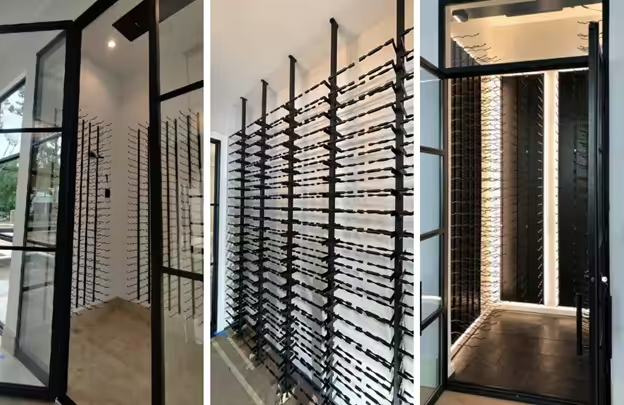
If you’re working with a hallway or a shallow reach-in closet, label-forward metal wine racks are a game-changer. Unlike traditional cork-forward wooden wine racks that require 12-14 inches of depth, metal pegs or rails can hold bottles parallel to the wall, requiring as little as 4-8 inches.
The Temperature Factor
If your space isn’t climate-controlled, your glass wine cellar or custom wood wine racks need to allow for maximum airflow. Avoid solid-back shelving. You want the air to circulate freely around each bottle to prevent hot spots that can prematurely age your wine.
Aesthetic vs. Utility: Wood or Metal?
This is where your personal style takes center stage. The vibe of your cellar dictates the materials you choose.
- Redwood, mahogany, and pine are the gold standards. They offer a warm, classic look and a tactile softness that feels correct for aging wine. Wood is also excellent at dampening vibration, which is a real benefit for long-term aging.
- If your home leans toward minimalist or industrial design, metal racking is the way to go. It’s sleek, often easier to install, and puts the focus entirely on the bottle labels rather than the furniture.
- Glass wall wine cellarracks in Austin, Dallas, and several other areas in Texas are great if you want to display your collection and make it part of your home decor.
The Human Factor: Accessibility and Flow
Finally, how do you plan to actually use your wine? Do you like to browse? Do you track your inventory on an app?
If you’re a visual person, ensure your racks have display rows or titled racks that show off the labels at a 15-degree angle. They make the cellar look like a high-end boutique and help you locate your favorite wines at a glance.
If you’re more of a set-it-and-forget-it collector, prioritize density. Solid cubicle bins allow you to stack several bottles of the same wine together, maximizing every square inch of your floor plan.
With the help of cellar-makers, like Wine Cellars of Houston, you build the cellar of your dreams. Just remember to choose racks that align with your collection and aesthetics!
FAQs
- Can I mix wood and metal wine racks in the same cellar?
Absolutely. In fact, many modern designers use a hybrid approach where wooden racks are used for bulk storage while sleek metal label-forward racks are used to create a focal point.
- Will standard wine racks hold sparkling wine or Champagne bottles?
Standard Bordeaux racks usually have openings around 3-3.2 inches wide, which is often too snug for the wider girth of Champagne or heavy Californian Sparklings. If you enjoy bubbles, install racks with 3.5-4 inches of clearance.
- How do I prevent my wooden racks from molding in a humid cellar?
High humidity (around 60-70%) is great for corks but can be tough on certain woods. To prevent mold or rot, choose rot-resistant woods like all-heart redwood or western red cedar for wine racks. Avoid soft, untreated pines or plywood.