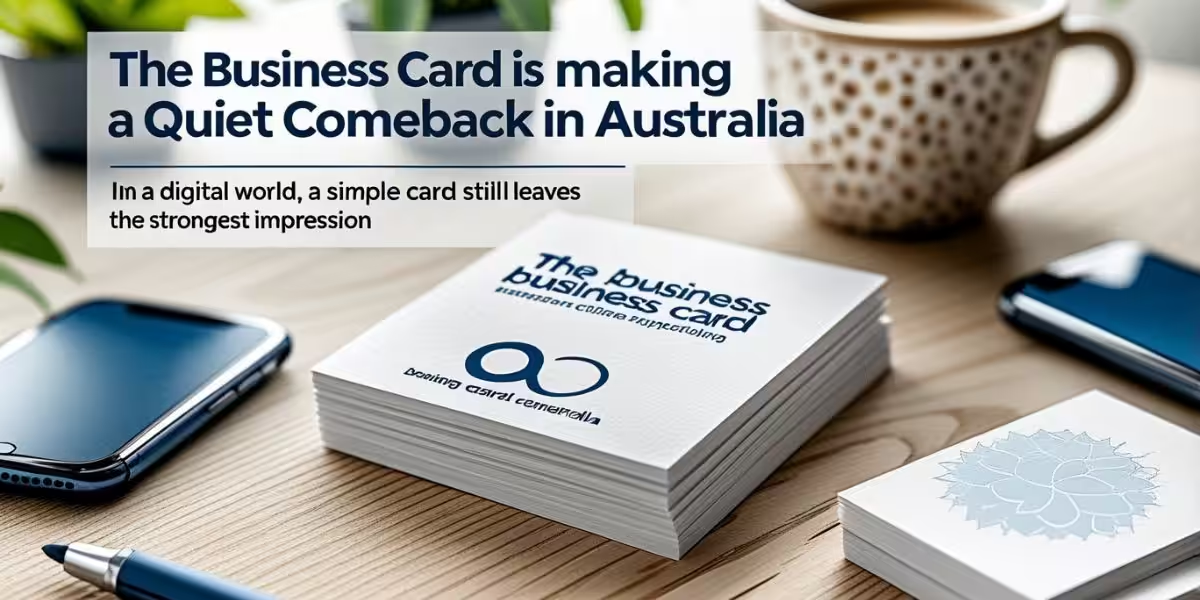
Walk into any trade show or client meeting across Australia this year, and you’ll notice something that wasn’t supposed to happen. More small business owners are reaching into their pocket for a paper card, not their phone. Somewhere between the QR code trend and the NFC pitch, plenty of professionals quietly went back to something simpler.
It’s not sentimental. Most people can’t recall a LinkedIn connection made three weeks ago, but they can still find a card sitting on their desk. For small businesses trying to stay memorable in a crowded inbox, that difference matters more than it used to.
People Prefer Physical Business Cards Because The Inbox Is Already Full
Most professionals aren’t short on contacts. They’re short on the ability to remember which one was useful. A LinkedIn request sent after a conference gets accepted and never opened again. A QR code gets scanned, saved to a phone’s downloads folder, and forgotten by the time the person gets back to their car.
This isn’t a criticism of digital tools. It’s just how attention works when there’s too much competing for it. A saved contact has no texture, no shape, nothing that makes it stand out from the fifty other names added that same week. A business owner scrolling through their phone a month later has no real reason to remember why that name mattered.
A paper card doesn’t solve this by being fancier. It solves it by being physical. It sits on a desk, gets stuck to a noticeboard, or stays in a wallet, present in a way a saved contact never is.
Why a Card in Hand Still Beats a Tap on a Phone
A phone needs three things to work in that moment: battery, signal, and a person who’s willing to fumble with an app in front of you. A card needs none of that.
On a job site
A tradie covered in dust, gloves half off, isn’t stopping to open an app. Handing over a card takes two seconds and works exactly the same whether it’s 7 am or the middle of a blackout.
At an open home
Real estate agents meet dozens of people in a single Saturday. Asking each one to scan something or wait for a page to load slows down a moment that should be quick and easy.
At a trade counter
No wifi, no drama. A card changes hands, and the conversation moves on. Nobody’s checking if their phone has one bar of signal.
A card doesn’t need to be charged, updated, or connected to anything. That’s not a small advantage. It’s the whole point.
The Difference Between a Card and a Good Card
Most cards end up in the same place: a drawer, a bin, or nowhere at all. The ones that survive usually have a few things in common, and none of them are complicated.
Thickness is the first thing anyone notices, even without realising it. A thin, flimsy card feels disposable before a word is read. A heavier stock feels like it was made on purpose.
Finish matters just as much. Soft-touch laminate feels different in hand. Spot UV adds contrast without shouting. Embossing gives a logo weight you can actually feel. None of these need to be expensive gimmicks, just deliberate choices that suit the brand.
A few things worth checking before printing:
- Card stock with some real weight to it, not standard office paper
- A finish that matches the brand, not just whatever the printer defaults to
- Enough spacing around the text so nothing feels cramped
- Contact details that are legible without needing to hold the card up to the light
This is really what separates premium business cards Australia businesses are printing this year from the ones that get tossed the same day. It’s not about looking expensive. It’s about feeling considered.
The Industries Keeping Cards Alive
Not every business relies on cards the same way, but a few industries lean on them constantly.
Trades
Referrals move fast in this industry, usually through word of mouth. A card left on a kitchen bench after a job is often what turns a happy customer into the next call.
Real estate
Agents meet new people constantly, often several times a day. A card exchanged at an inspection is quick, familiar, and doesn’t interrupt the conversation the way pulling out a phone can.
Hospitality
Café owners and small retailers rely on regulars becoming familiar faces. A card left at the counter is a small nudge that keeps a customer coming back or following the business online.
Professional services
Accountants, consultants, and advisers still hand over cards at meetings and industry events. Turning up without one can quietly read as underprepared, even if the meeting goes well.
Across all of these, the pattern is the same. Cards work best where people are meeting face to face and need something quick, simple, and easy to hold onto.
The Smart Way to Bridge Paper and Digital
The card does the first job. What happens after is where digital tools quietly take over.
A QR code printed on the back works well enough. Someone scans it, and a link opens. But it still asks the other person to do something: open a camera app, wait for the prompt, hope the lighting’s decent enough for the code to scan.
NFC skips that step entirely. A quick tap against a modern phone opens a profile directly, no app, no scanning, no guesswork.
How the handoff actually works
- The card gets handed over first, in person, the way it always has.
- A tap or scan on the back sends the person straight to a digital profile.
- That profile can hold a phone number, a booking link, a portfolio, whatever the paper card doesn’t have room for.
This is really where smart NFC business cards Australia small businesses are experimenting with earn their place, not as a replacement for the card in someone’s hand, but as the quiet upgrade sitting on the back of it. The physical exchange still happens first. The technology just picks up from there.
Before You Send It to Print
Most business card mistakes aren’t about design. They’re about restraint.
- Keep the information minimal: just a name, role, one phone number, and one link. Cramming in every social handle only makes the card harder to read at a glance.
- Pick a finish that matches the brand rather than whatever the printer defaults to. Gloss is fine, but it’s rarely the most memorable choice, and it’s worth deciding on purpose.
- Order in small batches. A stack of 100 is far easier to update than a box of 1,000 sitting in a drawer with an old phone number still printed on them.
- Check legibility before printing. Small text, low contrast, or a busy background all make a card harder to read in the two seconds someone actually looks at it.
None of this needs to be complicated. Getting a card right is less about standing out and more about not getting in your own way.
FAQs
Are business cards still relevant in 2026?
Yes. They’ve shifted from disposable handouts to considered, higher-quality pieces, but the behaviour of exchanging one in person hasn’t changed.
Are business cards making a comeback?
In a sense, yes. Small businesses across Australia are printing fewer but better cards, choosing quality over quantity as a way to stand out.
What is replacing business cards?
Nothing has fully replaced them. QR codes and NFC tags now sit alongside cards to handle follow-up, but the physical exchange still happens first.
What not to put on a business card?
Avoid cramming in every social handle or contact method. A name, role, one number, and one link is usually enough for the card to stay readable.
The Verdict
Paper cards didn’t come back because digital tools failed. They came back because they’re doing a job digital never quite could, being present, physical, and hard to forget in a way a saved contact isn’t.
For most small businesses across Australia, this isn’t an either-or decision. A well-made card handles the first handshake. A phone picks up everything after. Used together, they cover more ground than either one does alone.
The business owners getting this right aren’t choosing sides. They’re just handing over something worth keeping.