
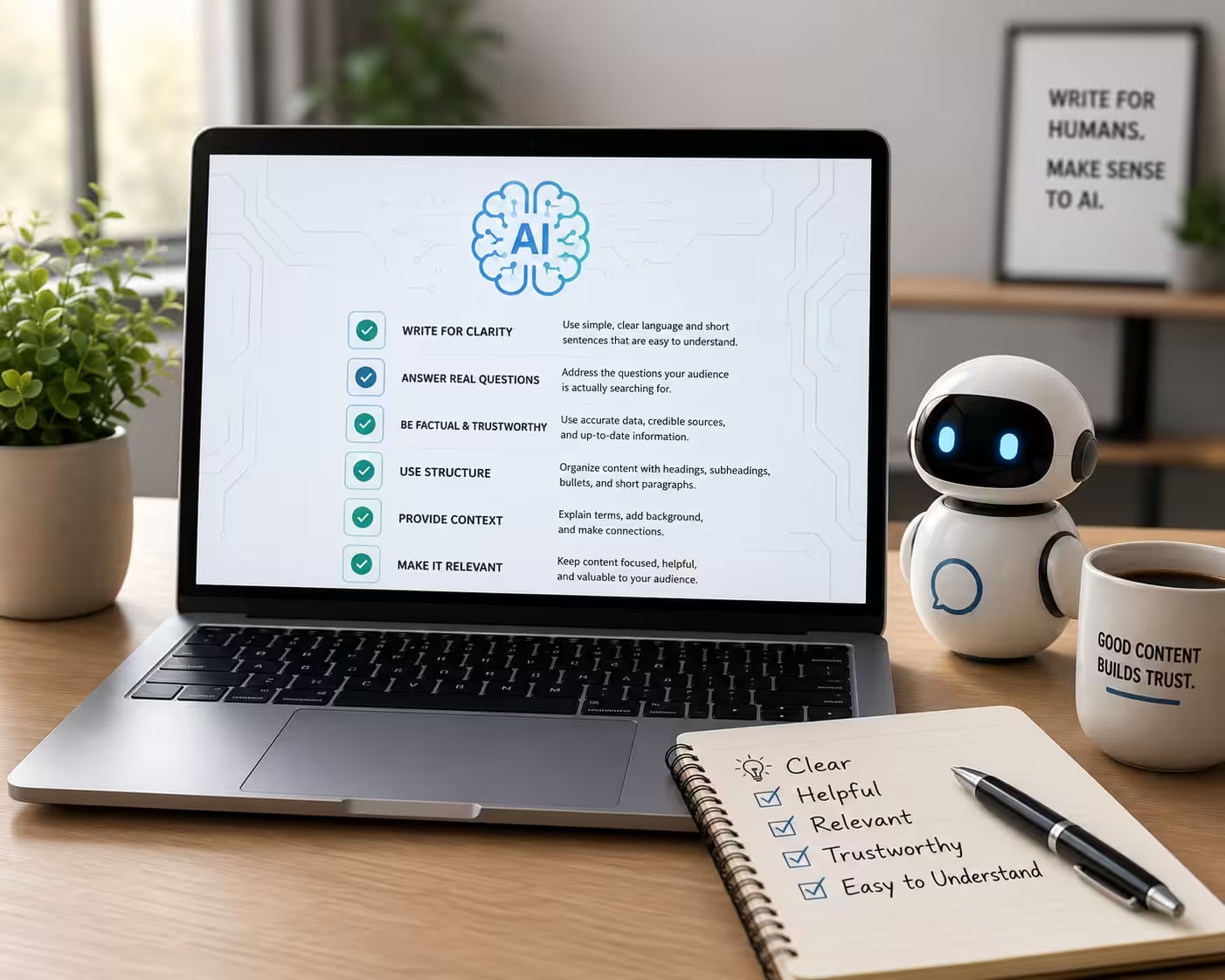
I used to think my SEO strategy was bulletproof—until AI search engines started eating my traffic for breakfast. Standard keywords just weren’t cutting it anymore.
Large Language Models interpret content and outline practical strategies to make content easier for AI to understand. Structured content, proper keywords, and understanding the context increase the credibility of the information.
LLM optimization for SEO covers the importance of clear writing, strong content structure, and entity-based optimization. By focusing on expertise, authority, and trustworthiness, businesses can create content that performs well in both traditional search engines and AI-generated responses.
So, yes, we have to write for the machines recommending us. Here’s how I cracked the code on LLM optimization to future-proof my content.
Understanding How Large Language Models Read Content
Best LLM optimization for SEO focuses on understanding language patterns, context, and factual consistency. Search engines primarily crawl websites and rank pages based on signals such as keywords, backlinks, and page experience.
When AI systems generate responses, they attempt to identify the main topic of the content, indicators of expertise and trust, and transparency, that is, clear answers to clear questions.
According to Sundar Pichai, “The best way to think about AI is as a way of augmenting human intelligence.” This highlights why businesses should focus on creating valuable, human-centered content that AI systems can understand and reference effectively.
Large language model optimization is usually content that explains a topic thoroughly, answers questions directly, and provides genuine value rather than simply targeting keywords.
Case Study
Canva is a strong example of a brand that benefits from LLM-friendly content. Canva creates content around topics such as branding, social media design, etc. This approach helps establish authority and makes the content easier for AI tools to understand.
Importance of LLM-Friendly Content in 2026
As AI-powered search tools continue to shape how people find information online, learning how to future-proof your content with LLM optimization strategies has become increasingly important.
According to Google Search Central, “The best content for AI is often the best content for people: content that is satisfying, helpful, and created for humans first.”
LLM content optimization best practices include writing content that is clear and well-structured. AI will ensure that your writing makes sense, and LLM will quote your content in more relatable cases. This is how businesses can improve their visibility, build authority, and stay competitive in the evolving digital landscape.
Uses of LLM in enhancing content growth
LLM optimization for SEO is the process of creating and structuring content so that AI-powered platforms can easily understand and interpret it. Its uses include improving brand visibility, establishing thought leadership, and enhancing content discoverability.
Satya Nadella has emphasized the importance of human involvement in AI, stating, “We always need to think of AI as a scaffolding for human potential versus a substitute.” This reinforces the idea that while AI can process information, human expertise remains essential for creating trustworthy and insightful content with more engagement.
Unlike traditional SEO, which only focuses on online ranking, LLM optimization techniques emphasize clarity, context, and trustworthiness to increase the likelihood that content will be surfaced in AI-generated responses.
Case Study
According to Google’s Helpful Content Guidelines, content should be created to help people, not to manipulate search rankings. A great example is Shopify. Instead of creating content focused only on keywords, Shopify publishes detailed guides, tutorials, and resources that answer real user questions about online business. Through this approach, Shopify has built strong topical authority and is often referenced when users search for relevant and authentic information.
AI-Friendly Content
By organizing information logically, adding adequate keywords, and answering questions directly, brands have successfully adapted their content strategies to remain visible in an AI-driven search landscape.
Traditional SEO vs. LLM Optimization
| Traditional SEO | LLM Optimization |
| Focuses on ranking in search engine results pages. | Focuses on being understood and referenced by AI systems. |
| Relies heavily on keywords and backlinks. | Relies on context, entities, and semantic relevance. |
| Optimizes for search engine crawlers. | Optimizes for both AI models and human readers. |
| Encourages keyword targeting. | Encourages topic coverage and comprehensive answers. |
| Aims to increase website traffic. | Aims to increase visibility in AI-generated responses and answer engines. |
| Success depends on rankings and clicks. | Success depends on authority, trustworthiness, and answer quality. |
Understanding Human Expertise
While AI can help create and summarize content, human expertise remains essential. Human-generated content is more likely to be trusted for its content implementation, real-world experience, expert insights, and accurate information.
Traditional content may be cliché and monotonous. Clear and structured content devoid of unnecessary complexity can generate accurate results. Poor quality content could confuse the model or lead to inaccurate interpretations. The goal is to present information in a way that aligns with the model’s processing capabilities. Using simple language and a logical flow helps AI models understand the context more effectively. As AI becomes a key source of information, clarity and relevance are more important than ever.
Interested in SEO and LLM-friendly content? Send us more tips at Write for Us: SEO.
Want to learn more business and startup growth strategies? Read our business and finance articles today.
FAQs
1. What is LLM-friendly content?
LLM-friendly content is content that is structured, clear, and context-rich.
2. How is LLM optimization different from traditional SEO?
Traditional SEO focuses on improving search engine rankings, while LLM optimization focuses on helping AI models interpret content accurately.
3. Can small businesses benefit from LLM optimization?
By creating helpful and well-structured content, even small businesses can improve their visibility in AI-powered search results.
4. What types of content perform best in AI search?
Comprehensive guides, FAQs, and case studies perform well because they provide clear and useful information.