
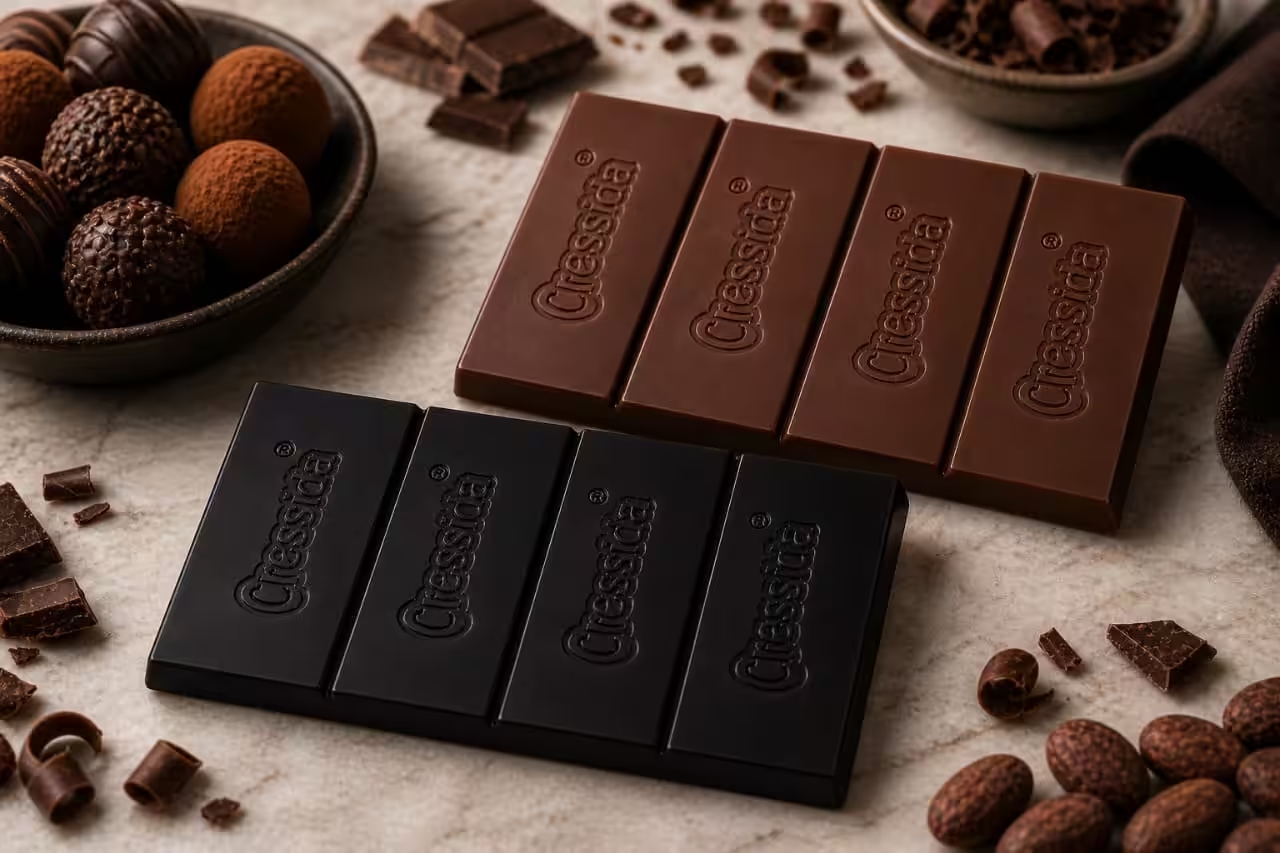
Compound chocolate slabs are a popular option for coating, moulding, decorating, filling, and baking applications. Unlike couverture chocolate, compound chocolate replaces cocoa butter with vegetable fats, eliminating the need for tempering.
However, not all compound chocolate slabs are the same, and the differences in fat content, cocoa, particle size, moisture, flavour, and production quality can impact the results. Selecting the Compound Chocolate Slabs Supplier requires a closer examination of the qualities of the product rather than focusing on the cost.
Fat Considerations
The fat in compound chocolate is one of the most crucial elements affecting the characteristics of the final product. The type of vegetable fats in the chocolate determines the melting point, setting properties, viscosity, snap, mouthfeel, and the ability to resist temperature fluctuations.
A high-quality chocolate slab should provide the necessary melting and setting properties during processing and baking. The wrong combination of fats will result in excessive softness, greasiness, waxiness, or poor holding capacity. Poor fat quality will also impact the appearance of the final product, especially when using compound chocolate for coating and baking.
A buyer should ask the potential supplier about the specifics of fat content in the slab when the product will undergo cooling, transportation, or storage.
Cocoa, Flavour, And Consistency
Compared to couverture chocolate, compound chocolate contains less cocoa butter. However, the amount of cocoa in the slab still impacts the flavour and colour of the product. A high-quality slab will provide a rich chocolate flavour without being overly sweet or artificial.
The proportion of cocoa, sugar, milk, and other ingredients should align with the intended purpose of the chocolate and the expectations of the final product. For instance, dark compound chocolate will have a stronger cocoa flavour, while milk chocolate will provide a sweeter note. The option of white compound chocolate is also available, although the focus should be on the milk fat content, vanilla, sweetness, and colour.
Consistency in flavour is also vital, as variations in the characteristics of the slabs will impact the final result.
The Role of Texture
The texture of compound chocolate is another critical consideration, as it will define the mouthfeel of the product. Slabs with a high percentage of cocoa and low sugar will have a rich, dense texture. However, the fat content, cocoa percentage, viscosity, and particle size will also impact the texture of the final product. A coarse texture is often the result of improper particle size or refining.
A bakery should examine the quality of the chocolate, ensuring that the product has a consistent texture and can be processed into a smooth surface (e.g. when used for coatings). A buyer may also request samples to obtain an idea of the texture of the product, as well as the variations from one slab to another.
Viscosity and Melting Points
Depending on the intended application, compound chocolate should have different characteristics of viscosity and melting points. For instance, the chocolate used for coating on a bakery product should have a specific consistency and flow to avoid excessive accumulation on the surface of the confectionery. Chocolate for moulding and other applications will have different requirements.
The viscosity and melting point are especially critical when using compound chocolate in high-volume production. Too thick, and the product will require more material for coating and be slower to process. Too thin, and it will not provide even coating and will flow away from the surface of the product. A stable viscosity will also ensure that the baking process does not impact the integrity of the chocolate layer.
The supplier should be able to provide guidelines for working with the product to ensure that it provides consistent results with every use.
Setting Properties
One of the significant advantages of compound chocolate is the ability to set without tempering. At the same time, the setting capabilities will vary from one supplier to another. A high-quality product will have a consistent setting capability, with a firm surface after the setting process. It should also maintain the characteristics of texture, viscosity, melting point, and appearance, as indicated in the specifications.
The ability to set quickly and consistently is essential for high-volume production. At the same time, the process of setting will also depend on the temperature of the product, the thickness of the chocolate layer, the humidity of the environment, and the conditions of storage. A bakery may want to conduct a test with the product to examine its setting properties under specific conditions before making a final decision.
Appearance and Finish
The appearance of compound chocolate can be another crucial differentiator between the products of different suppliers. A good quality compound chocolate will have a consistent appearance and surface after the setting process. Chocolate with inconsistent texture and poor surface structure will negatively impact the appearance of the final product.
White spots, streaks, and inconsistencies can indicate the presence of fat bloom or improper storage. While compound chocolate is less demanding in terms of setting and temperature fluctuations, it still requires following specific storage instructions.
The supplier should be able to provide the necessary guidelines for storage and the conditions of the warehouse. A buyer should pay specific attention to the shelf-life, storage temperature, and the presence of allergens.
Moisture and Storage
The quality and integrity of the compound chocolate are also impacted by the presence of moisture and the ability to prevent fat bloom. Sticking to the specified conditions of storage and transport will prevent potential issues with the product. A good supplier will take responsibility for the product even if it has been exposed to improper conditions.
High moisture content can lead to the formation of sugar bloom, while improper temperatures can promote fat bloom. The presence of bloom will impact the appearance and integrity of the surface. In addition, the quality of the packaging will also impact the integrity of the slabs during transport and storage.
The packaging should also prevent potential contamination of the product and exposure to other flavours. A bakery can take measures to prevent such occurrences by establishing appropriate storage conditions for compound chocolate. The use of FIFO (first in, first out) will also ensure that the oldest product is used first, preventing it from spoiling due to improper storage.
Application and Ingredient Specifications
When deciding on a supplier, it is also essential to examine the application of the intended use and the ingredients. The fat content of the product will impact not only its characteristics but also the ability to use it for specific applications.
The application can influence the choice of compound chocolate. The intended purpose will determine the specifications of the product, including the melting point, viscosity, texture, and setting capabilities. A few questions to consider include:
- what is the desired thickness of coating or layer?
- what is the expected temperature during baking?
- what is the desired colour, flavour, and texture?
- what are the cooling conditions and production rate?
- what are the packaging and storage conditions?
A slab for coating digestive biscuits will have different requirements than the product for moulding or inclusions. In addition, a buyer should pay attention to the specifications, such as the presence of allergens, the expected shelf-life, and batch numbers. This information will also identify the batches affected in the case of a product recall.
Such considerations are especially relevant for those working in commercial bakeries, as they will be the ones to sell the final product to the consumers. The presence of the proper documentation and traceability will allow the business to identify defective products and ensure that they do not reach the consumers.
Batch Consistency
The quality and characteristics of compound chocolate can vary from one batch to another. It is crucial to ensure that the selected supplier provides consistent results with every batch of the product.
Such variations can lead to the need for reworking the recipe or the appearance of off-flavours. Such issues are especially relevant for those using compound chocolate in recipes with a specific balance of flavours and ingredients.
When considering a specific supplier, it is essential to examine the variations between the batches. Varying viscosity, colour, flavour, and other characteristics can be an indication of poor-quality control. A buyer can also request samples to test the product with multiple batches.
The presence of the necessary documentation and traceability is also essential for commercial bakeries. It will help identify the batches of ingredients that may need to be recalled when there is a quality or safety concern.
Packaging, Supply Reliability, and Technical Support
A reliable supplier can offer more than just products. The packaging of the slabs can ensure that they reach the bakeries in perfect condition. The size and frequency of supply and lead time can also be organized to suit the regular bakery needs.
In addition, the technical support can be requested to explain how exactly the compound chocolate should be used in a particular application. For instance, one may ask how it is heated, handled, stored, or what problems may arise during the process.
Choconutri , thus, can be compared to similar yet competing suppliers and manufacturers to create a preference list. One can evaluate the chocolate in terms of quality, quantity, and specific application and choose the most suitable option.
Making the Final Choice
A choice between Compound Chocolate Slabs Supplier requires a rational and objective approach. It is not enough to prioritize prices and grams per kilogram. Fat, cocoa, and particle content, melting point and viscosity, setting speed, appearance, and storage stability, as well as compliance with food safety and batch uniformity, should be considered.
After obtaining samples and trying them in specific applications, one can conduct a rational assessment. It is necessary to observe the behavior of the product in real-time working conditions, i.e., bakery equipment and tools, temperatures, cooling down, and storing. Then, the opinion of the bakery staff and further calculations based on technical and commercial specifications can be taken into account.
In such a way, the final selection of a compound chocolate slab supplier can be made. It would ensure the bakeries against the risk of choosing the wrong option and following the same problems as before.