
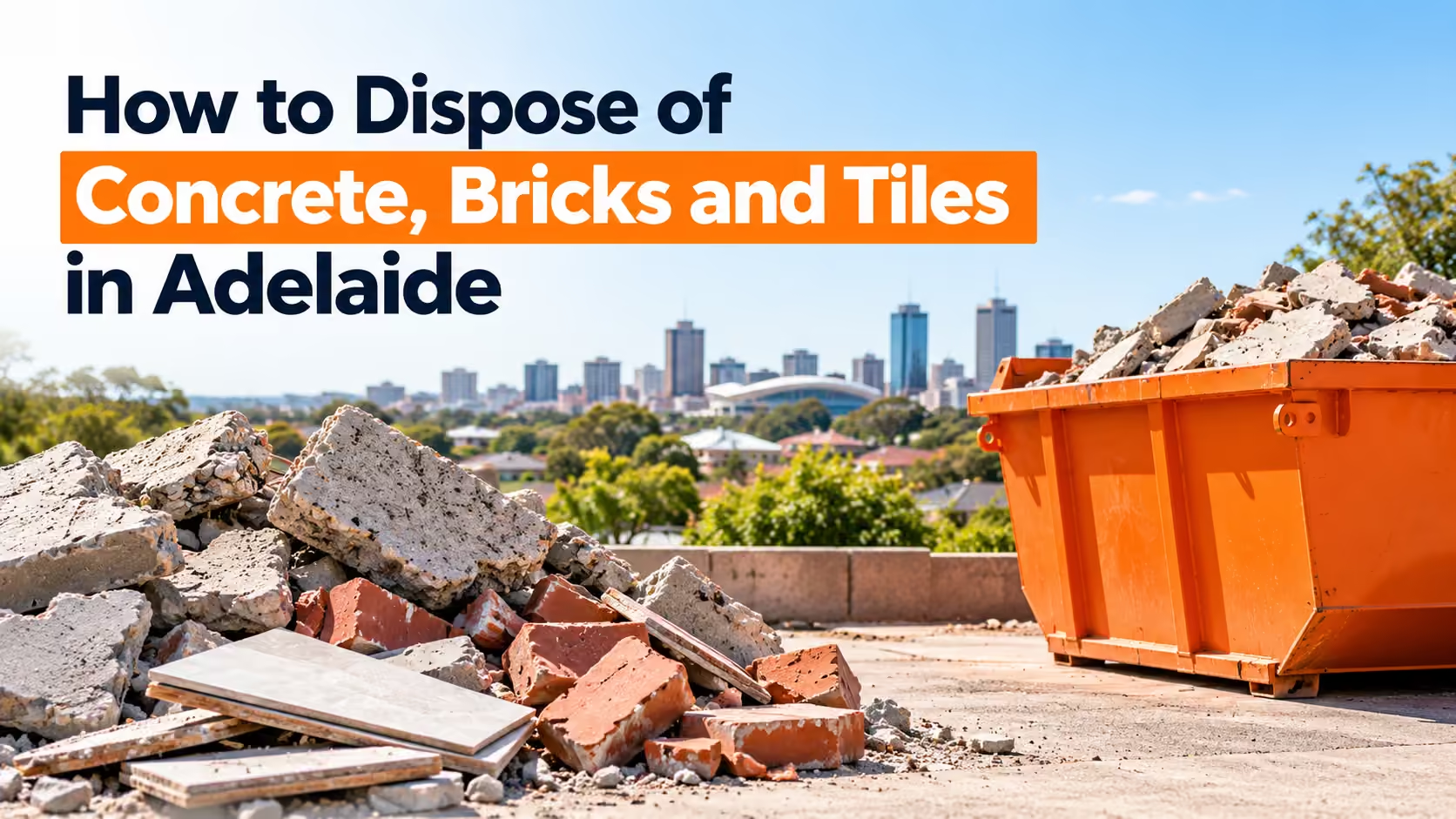
Concrete, bricks and tiles are common types of waste generated during home renovations, landscaping, construction and demolition projects. Whether you are replacing an old driveway, renovating a bathroom, removing a brick wall or upgrading outdoor paving, disposing of these materials correctly is important.
In Adelaide, concrete, bricks and tiles should not be placed in regular household recycling bins. Depending on the material and quantity, they may be accepted at an appropriate resource recovery facility or collected through a suitable skip bin service. Choosing the right disposal method can help reduce landfill waste, improve site safety and keep your project organised.
Why Proper Disposal of Construction Waste Matters
Construction materials are heavy and can damage waste collection equipment when placed in unsuitable bins. Concrete and masonry can also be processed at specialised facilities for potential reuse in construction and landscaping applications.
Incorrect disposal may lead to additional charges, rejected loads or unnecessary environmental impacts. Before arranging collection, separate your materials and confirm the disposal requirements with your chosen provider.
1. Identify the Type of Waste You Need to Remove
Start by identifying the materials generated by your project. This helps you select an appropriate disposal option.
- Concrete: Broken slabs, old paths, driveway sections and concrete blocks.
- Bricks: Damaged bricks, broken masonry and leftover building bricks.
- Tiles: Ceramic, porcelain, terracotta and other approved tile waste.
- Pavers: Concrete or clay pavers removed during landscaping and outdoor renovations.
Some disposal services accept these materials together, while others require a clean load containing only approved masonry waste. Check whether mortar, reinforcing steel, soil or other materials are permitted before loading your waste.
2. Choose a Suitable Skip Bin for Heavy Materials
Hiring a skip bin can be a convenient option when a renovation or construction project generates a large amount of rubble. However, concrete, bricks and tiles are much heavier than ordinary household rubbish.
A bin that looks only partly full can still exceed its permitted weight limit. For this reason, choosing a bin based on the waste type and weight restrictions is more important than choosing one based only on volume.
When arranging reliable skip bin hire for waste disposal in Adelaide, explain exactly what you need to remove. Ask about the accepted materials, maximum weight, delivery access and any additional fees that may apply.
For smaller renovation projects, small skip bin hire Adelaide for concrete and brick waste may be worth considering, subject to the available bin sizes and waste acceptance rules. Confirm that the selected bin is suitable for heavy masonry before booking.
3. Separate Concrete, Bricks and Tiles Where Required
Sorting your construction waste before disposal can make the process easier and may improve recycling opportunities.
Keep reusable materials separate from broken or contaminated rubble. Intact bricks, pavers and tiles may be suitable for reuse in another project, donation or resale if they are in good condition.
For materials that cannot be reused, check whether your disposal provider requires a dedicated concrete or masonry load. Avoid mixing them with general rubbish, green waste, timber, soil or other materials unless the service explicitly permits it.
Separation is especially useful for builders and contractors managing larger renovation or demolition projects because it makes waste handling more predictable.
4. Consider Recycling and Resource Recovery Facilities
Another option is to transport suitable construction waste to a facility that accepts concrete, bricks or tiles. Some resource recovery facilities process clean masonry into recycled construction materials.
Before taking your load to a facility, contact it to confirm:
- Which materials are accepted.
- Whether mixed concrete, brick and tile loads are permitted.
- Whether the waste must be clean and separated.
- Applicable fees and weight-based charges.
- Opening hours and vehicle access requirements.
South Australia’s official waste guidance recommends checking with the relevant transfer station before delivering building materials, as accepted items and fees can vary.
You can review the guidance from Recycle Right SA before deciding where to take your waste.
5. Avoid Common Construction Waste Disposal Mistakes
A few simple precautions can help prevent delays and unnecessary costs.
Using a general waste bin: Concrete, bricks and tiles may be prohibited in ordinary rubbish bins. Always confirm the correct waste category.
Overloading the bin: Heavy materials can exceed weight restrictions before the container is full. Follow the provider’s loading instructions.
Mixing unsuitable materials: Soil, timber, green waste and general rubbish may not be accepted in a masonry-only bin.
Ignoring hazardous materials: Do not place asbestos or other hazardous materials in a standard skip bin. Arrange specialist advice and disposal where required.
Leaving waste unsecured: Broken tiles and concrete can have sharp edges. Wear suitable gloves, protective footwear and eye protection when handling rubble.
Booking without checking access: Make sure the delivery area is suitable for the bin and that placement complies with any applicable local requirements.
6. How to Make Construction Waste Disposal More Efficient
Planning your disposal before starting work can save time throughout a renovation.
Estimate the amount of waste you expect to generate, identify the materials, and decide whether reuse, recycling, direct delivery to a facility or skip bin collection is the most practical option.
For larger jobs, organise waste removal around the project’s stages. Keep concrete and masonry in a designated area, away from materials that may contaminate the load. This can help maintain a safer worksite and make collection easier.
Homeowners should also ask about the total cost, including delivery, collection, disposal charges and any excess-weight fees. Understanding these conditions in advance helps avoid unexpected expenses.
Conclusion
Disposing of concrete, bricks and tiles in Adelaide requires the right waste category and a suitable disposal method. Depending on the quantity and condition of the materials, you may be able to reuse them, take them to an approved resource recovery facility or arrange a suitable skip bin.
Always confirm accepted materials and weight limits before booking or transporting your waste. With proper sorting and planning, you can manage construction waste more safely, reduce avoidable costs and support responsible resource recovery during your next renovation or building project.