There is one thing that many illustrators often miss when it comes to individuals of a developmental age. It is a failure to connect with these young, small readers. Modern-age children are very advanced, and their attention spans are quite compromised. They consume information differently, think, observe, and even interpret differently.
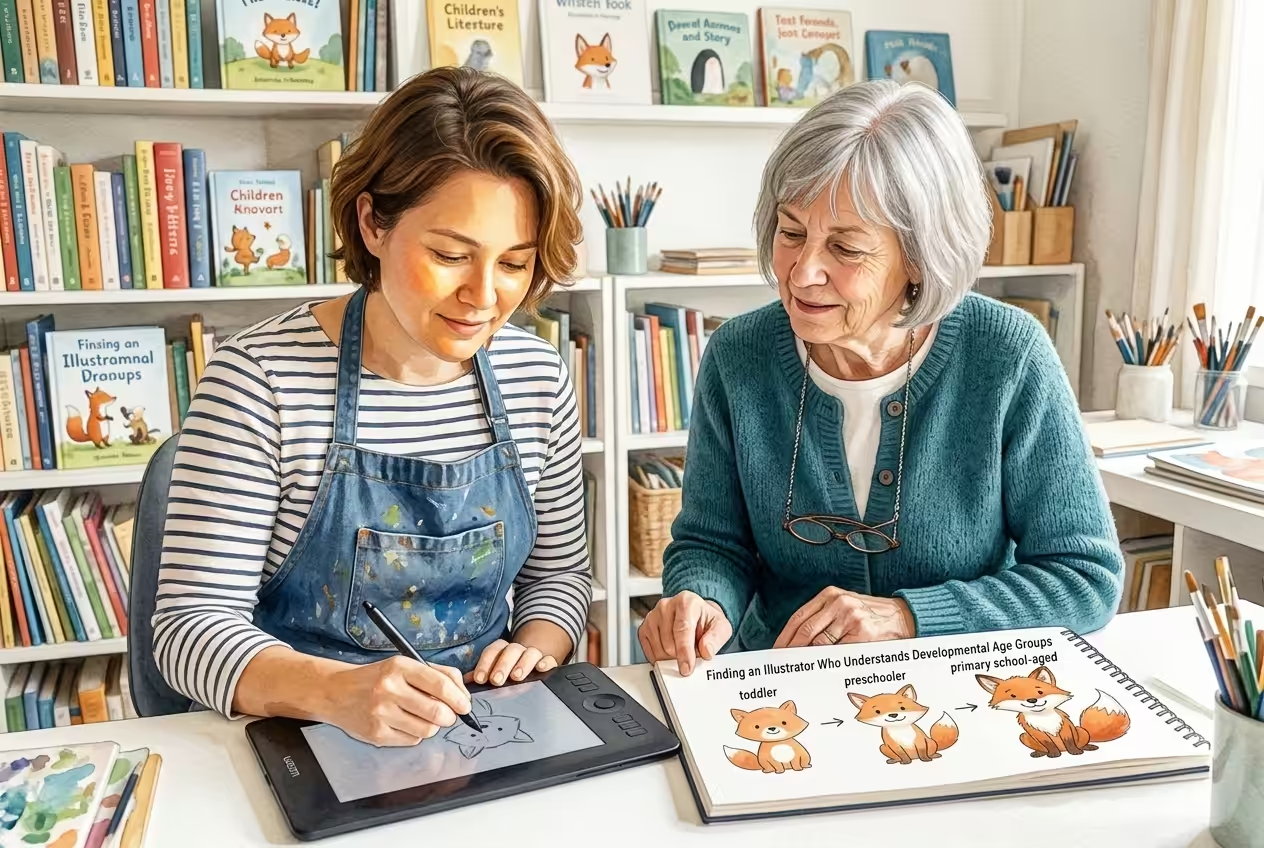
If we talk about the processing of visual information, a toddler, a four-year-old, and a pre-teen look forward to it and react in different ways. Here, finding an illustrator who understands these intricacies and actually focuses on the reader experience is very significant. This is also one of the most important decisions for the writers during their publication process as well.
Why Artistic Style is Not the Most Important Part of Developmental Understanding?
The way children interpret visuals varies with age. A toddler might be interested in recognizing familiar objects and expressions, whilst an older child will be able to see relationships, feelings, and visual clues in a scene.
Developmental stages are matched with artwork created by an illustrator knowledgeable about these stages. The outcome of children’s book illustrations Canada by a professional is a smoother reading experience, increased engagement, and enhanced story comprehension.
Visual Needs Change with Each Passing Age
Kids’ ability to handle more detail and complexity increases as they get older. Illustrations should be adjusted and not be the same for everyone.
Reading Confidence Starts with Clarity
If pictures help to clarify rather than cause confusion, children will be more likely to be engaged and enjoy the story on their own.
How Should an Illustrator Approach the Various Age Levels?
One thing that aspiring illustrators need to understand is that creating age-appropriate characters demands more clarity and attention to detail than just cute and attractive characters. When kids transition into each passing age, their way of thinking also transforms, and this understanding is quite important, which makes any illustrator a top choice.
1. Early Childhood Readers
For very young children, books are based on large shapes, strong emotions, and simple compositions. The aim is not to tell a story in detail but to get them to recognize it and pay attention to it.
2. Developing Readers
The illustrations help explain action, relationships, and the development of plot in children from early to middle elementary years. Visuals are not used to decorate, but instead become part of the storytelling.
3. Older Children
Lastly, the growth of the readers can be reflected in the detail of the environments, the subtlety of the symbols, and the complexity of the expression of the characters, which can be added to the illustrations as the reader matures. The environments, symbols, and expressions of the characters can be enriched as readers grow, so as not to overpower the page.
Aligning audiences with illustrated content is of high importance to reader engagement, and many childrens book publishers specifically look for illustrators who can adapt their approach for all ages.
What Does It Take to Be a Skilled Illustrator?
Credible and experienced children’s book illustrators usually start by realizing who their audience is, and then move on to creating art for them.
Why Does Reader Research Come First?
Through reader research, expert illustrators learn some of the target age group’s interests, along with their attention span, emotional development, and reading habits.
How Does Character Design Follow Story Goal?
Instead of creating characters just for looks, the experienced illustrators look for characters who express emotions and actions to young readers.
How Does Collaboration Improve Results?
Many illustrators collaborate closely with authors, editors, and educators to make sure every element of the illustration is used to enhance the story and to appeal to the audience.
What Goes into Finding the Right Illustrator?
- Look for Age-Specific Experience. First, look at more than portfolios when you are searching for an illustrator. Discuss projects that others have written for an audience similar to yours. The person who can draw a cute teddy bear in a toddler’s book may not be the most suitable for a middle-grade fiction book.
- Request Them to Share Their Thinking Process. Ask for reasons for design choices. Those who have a good working knowledge of child development will be able to articulate the reasons for certain approaches to visuals being effective for certain age groups.
- Evaluate Storytelling Ability. Emotions, actions, and story should be conveyed even before the words are read, in a good portfolio.
The artwork in many of the best illustrators’ projects is an example of art that is not only well-crafted but also well thought out in terms of a child’s development as a reader.
What is Important to Consider Before Hiring an Illustrator?
Compatibility, expertise, and communication should be the main factors in making a hiring decision.
Firstly, Review Their Adaptability!
Inquire if they tailor their approach to developmental needs, or if they treat all projects as if applying a formula visually.
Then, Discuss Feedback and Revisions
A structured revision process can yield better results and reduce miscommunication in production.
Lastly, Consider the Context of the Artwork
Illustrations impact branding, discoverability, and audience expectations. Some children’s book marketing are consulted from the beginning for this reason, to make sure that the visual direction will support a longer publishing goal.
FAQs
To what extent does an illustrator need to know about child development?
It is important since children’s visual understanding changes dramatically as they become older. The emotional and cognitive capacities of the reader should be reflected in the illustrations.
Is it appropriate to hire an illustrator who focuses on just one age group?
If your book is intended for a certain audience, specialists can be a great option. Their concentrated experience mostly leads to improved visual communication.
Is it possible for a talented artist to naturally become a talented illustrator?
Not always. Developmental comprehension and artistic talent are distinct skills. The best illustrators blend the two.
Wrapping Up!
Choosing an illustrator for the developmental age group accounts for the approach that focuses on communication. The illustrator in this modern competitive world who genuinely understands how children communicate, observe, and behave based on the information they are consuming is actually the one who should be preferred. At different stages of the development of their mind, they demand different kinds of stories, visuals, and animations. When an illustrator adapts the kind of approach that focuses on elevating storytelling through graphics and genuinely tries their best to resonate the content with the visuals can actually enhance the whole reading experience.