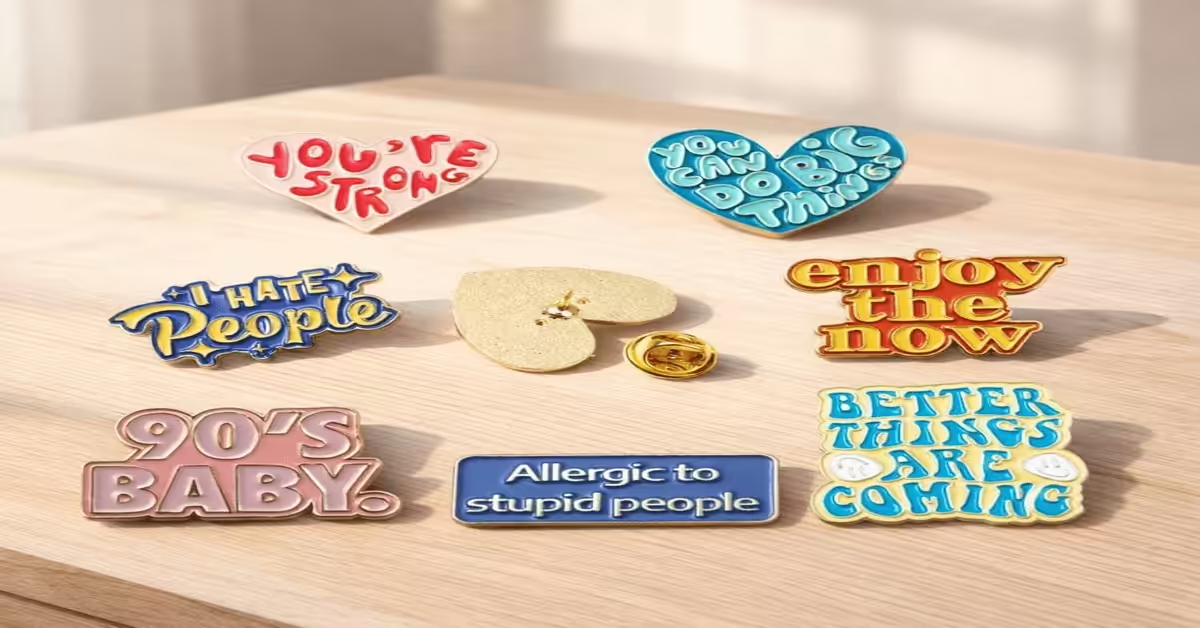
Small pins might look little for you, but they have great branding power. You can put multiple brand elements, including your text, logo, and design, to promote your events and help to build awareness. These pins can be used as part of merchandise and giveaways. They are perfect and versatile branding materials.
A pin can grab audience attention, reflect identity, spark conversation, and can also make your business viral. Brands can get high visibility through these custom pins. You can use these badges for every brand, campaign, and uniform, and they can become a seamless part of your branding effort. This blog is a practical and friendly guide for you to learn about different types of custom pins and how to design effective custom pins in the UAE for high impact.
Why Custom Pins Are A Branding Essential?
Custom pins UAE are used as mini billboards at a low cost. You don’t need to break the bank, but the publicity of these custom pins has a high impact. This is one of the main reasons that entrepreneurs are choosing them as a branding tool. They are not just affordable, but also easy to personalize, make, and distribute.
You can choose from various designs, colors, and shapes, as they can be customized from any angle. They are small and vibrant, while also easily collectable. People often love to keep these badges with them, which reminds them of your brand. This little investment can maximize your brand visibility and increase your brand impact.
Different Types Of Custom Pins
There are various types of custom pins, and each one of them has different functionality. You need to choose the right type of pins to ensure maximum impact. Below are the different types of pins with their durability, look, use, and cost.
| Pin Type | Durability | Look | Use | Cost |
| Enamel Pins | High | Colorful | Branding | Medium |
| Soft Enamel Pins | High | Textured | Events | Low |
| Hard Enamel Pins | Very High | Smooth | Premium | High |
| Pin Badges | Medium | Simple | Giveaways | Low |
| Lapel Pins | Very High | Elegant | Corporate | Medium |
| Flag Pins | High | Patriotic | Identity | Medium |
| 3D Pins | High | Sculpted | Unique | High |
| Metal Pins | Very High | Metallic | Formal | Medium |
| PVC Pins | High | Flexible | Youth | Medium |
How To Design Custom Pins
Below are the simple steps to design custom pins and perfectly translate your artwork into smart badges.
1. Define Your Pin Purpose
Before designing your pin, you must need to know your intent to design this pin. For example, are you choosing pins for events, collectibles, or as an award? Defining your pin’s purpose will help you to choose the right type of pin and make it perfect for the use. Some are made with the basic design, while others have an added touch of elegance.
2. Choose Your Pin Type
When you are choosing the design, you need to choose the pins according to your purpose, cost, and look you need, whether it is for an event or customized gifts. Whether you need textured pins with metal finishes, smooth and flat pins, solid metals, or detailed images, choosing the right type of pins that is tailored to your brand is crucial.
3. Decide Your Pin Size
The typical standard size of the custom pins ranges from 0.75” to 1.25”, so you have enough area to add meaningful design, but too much design can make it heavy. If you are making custom hat pins, then the best size ranges from 1” to 2”. You can go up to 3” for the back patches, and they often contain intricate designs with more text.
4. Sketch Your Concept
You must remember that your final artwork has a tiny space. It is best to design your pins with big lines, clear forms, and little details. Ensure to keep your shading simple and don’t clutter the background, and also don’t use tiny fonts. Perfect design is the one that can be identified by somebody an arm’s length away.
5. Digitize Your Design
You may start making your artwork with a pencil on paper, but you need to digitize your design before manufacturing. The process will move forward once the design is transformed through the software. The vector format of the design supports scaling while ensuring the quality remains the same at any size. Layers will remain distinct in the file, which separates cut lines for the mold. Otherwise, tools will face complications.
6. Choose The Colors
Most of the pin makers often use a Pantone machine to ensure color matching of colors throughout the design. Each section can have its own shade without reliance on CMYK or RGB systems. Designers often assign a single color code space instead of blending colors digitally. Using too many hues can clutter the pin, and adding a number of colors can slow down the production of the badges.
7. Pick Your Plating And Finish
The exposed part of the pin is called the plating or finishing, and it affects the final look. There are various options for plating, like shiny gold, black nickel, rose gold, antique copper, etc. Ensure you combine your Pantone color with plating to bring excellent contrast.
8. Select Your Backing
The last step is to choose the type of backing to attach the pin. You can use a butterfly clutch (military clutch) or rubber backing for everyday fashionable use. Most people often use magnetic pins widely to protect fine fabric from damage from locking clasps or pin holes to prevent losing expensive collector pins.
Frequently Asked Questions
How many colors can be used for custom pins?
The filling process will become hard if you use more than 8 Pantone colors. Too many colors can make each unit cost more, and it will become messy. The ideal number of colors is 2 to 3, but if you want more, then you should limit it to 8 for a cost-effective design.
Is it effective to use a gradient on a custom pin design?
No, custom enamel pins contain traditional enamel, which is like a paint that fills recessed areas, and those areas are separated by metal lines so you can blend them into gradients. If you want gradient colors for your brand pins that look like an image, you can order printed pins instead of enamel.
How much time does it take to make custom pins?
It usually takes 2 to 4 weeks of time to produce these high-quality customized pins. The overall timeline depends on the design complexity, urgency, and quality of the order, so the turnaround time differs.
Conclusion
Creating customized pins is a fascinating process, but it entirely depends on creativity and skilled craftsmanship. They are collectable items that brands can use as powerful marketing tools. It reminds the audience about your brand, and this small investment can have a high impact on your brand.
There are various types of custom pins, and each one has different functions. All of them are different according to durability, cost, use, and look. You should first define the purpose of your pin and choose the pin type that aligns with your brand purpose. Ensure you pick the right size and craft your design perfectly. Now transform it into digitize file and choose your desired colors. Select the finishes and backing to ensure the best look and perfect attachment.