
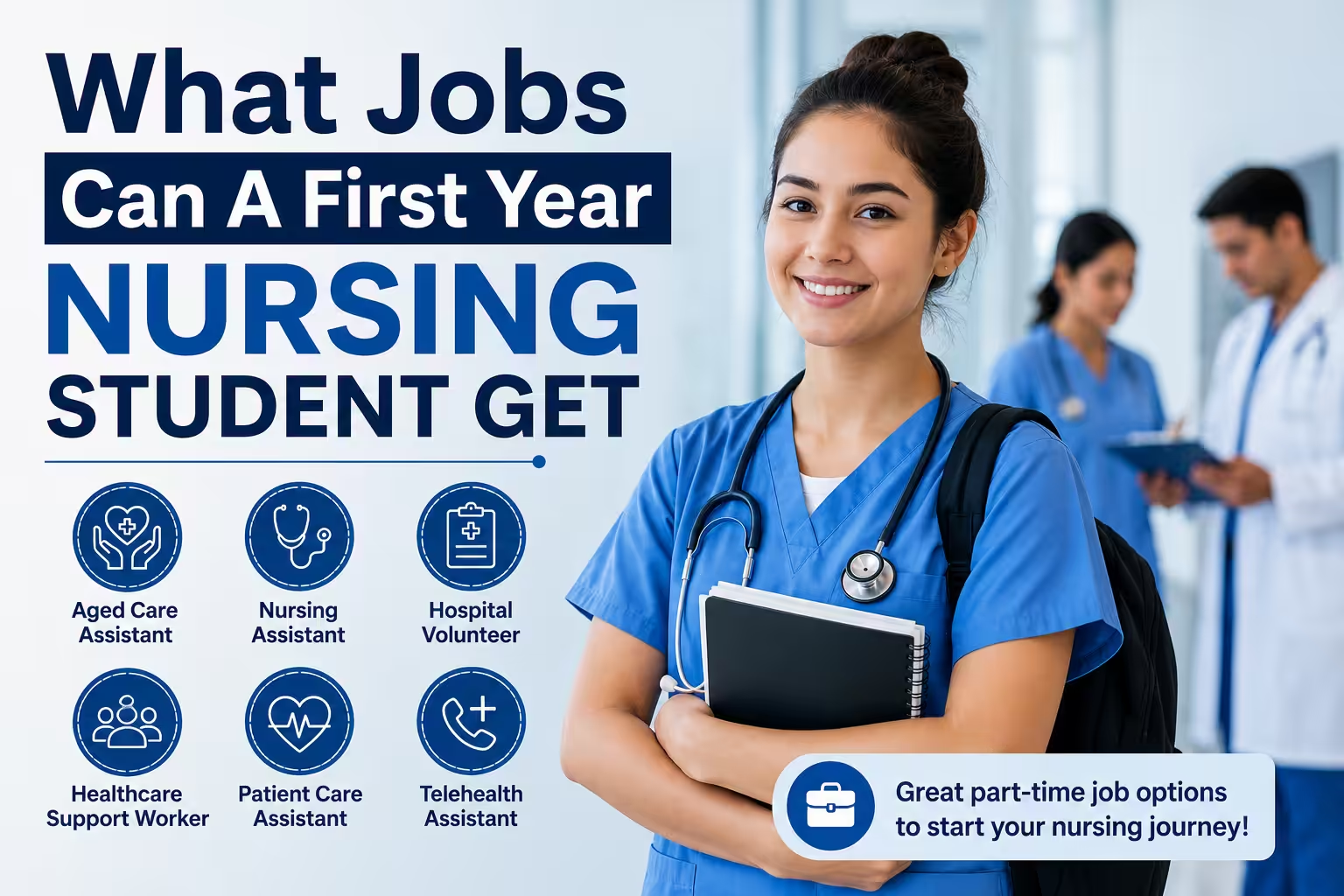
Most families and single-income earners often struggle to find jobs during their school years to survive. The number of nursing students doing jobs is higher. There are plenty of jobs available for those students who are studying or have not completed their clinical training yet. Some of them will help you to develop valuable healthcare skills, while others will work well with demanding class schedules. This blog is a friendly guide to the best jobs can a first year nursing student get.
Nursing school can be an exciting journey, but it often comes with significant financial responsibilities. Most nursing students look for part-time jobs around their busy schedules to manage their finances for textbooks, transportation, tuition, and everyday expenses. One of the biggest challenges is to find a job that not only pays your bills but also supports long-term career growth without interfering with your studies.
Best Jobs For A First-Year Nursing Student
Finding the right job is about more than earning extra money. If you choose the right position, it will improve your communication skills, enhance your confidence, give you valuable experience for future applications, and make you more competitive. Most of the students also look for the best assignment help to balance coursework and manage their part-time jobs. Check out this list that answers what are the jobs a first year nursing student can get.
1. Emergency Medical Technician (EMT)
EMTs are those members of the emergency medical services who provide patient care outside of the hospital setting and operate in a limited scope. EMTs needed to complete their training programs and achieve certifications, while some of the positions you get in fire and police departments. You can look for these positions within hospitals or private ambulance companies. The duties of the EMTs are:
➢ Performing assessments
➢ Taking vital signs
➢ Applying bandages or splints
➢ Performing CPR
➢ Assisting the paramedic with treatments and procedures
2. Phlebotomist
The job of a phlebotomist is to draw blood from patients for clinical or medical testing, donation, transfusion, or research. Their duties involve:
➔ Interpreting requested tests
➔ Instructing patients on post-puncture care
➔ Delivering a specimen to a laboratory
➔ Withdrawing blood
➔ Ordering tests as per the doctor’s requisition
This job is great for building pre-nursing experience, as nurses often need to place IV lines and draw blood. Some programs required to complete training program, licensure, or certification, while others offer employer-provided training programs.
3. Monitor Technician
The role of a monitor technician is to work in the hospital at the monitor stations. Their duty is to monitor significant changes that indicate a problem with patients and communicate those changes in health status to nurses. These monitor technicians require an EKG interpretation course, but they get trained on the job. This is the best opportunity to get started at the hospital and build your network as a student outside of the clinical rotations.
4. Patient Care Technician (PCT)
They work under the supervision of the nursing team and assist with basic tasks, such as helping patients ambulate and taking vital signs. They also collect medical samples, escort patients to treatments or tests, and communicate changes in the patient’s health status to the nursing staff. Some of the employers often require credential training programs and certifications. Nursing students can gain hands-on experience and often rely on nursing assignment help Australia to complete coursework while balancing work commitments.
5. Dialysis Technician
Their job is to maintain and operate medical equipment used for dialysis patients with kidney disease. They work under the supervision of a healthcare provider, including drawing blood samples, taking vital signs, and providing emotional support to patients undergoing treatment.
6. Certified Nursing Assistant (CNA)
The role of a nursing assistant administrator is to care for patients in different healthcare facilities, such as assisted living, nursing homes, community-based long-term care, hospice, and correctional institutions. Their job is to help patients with activities of daily living (ADL) and to provide basic healthcare under the supervision of a nurse. They are sometimes required to complete an education program and obtain certification. There are also some available specializations, depending on the state. Wondering what are the most lucrative jobs can a first year nursing student get? It is one of them.
7. Home Health Aide
Home health aide is a nursing role in which nurses provide care to patients who need assistance in their homes. They help patients with ADLs like dressing and bathing. They also provide support for light housekeeping, transportation to appointments and companionship. Some of them provide basic healthcare under the supervision of another healthcare provider. It includes checking the vital signs and changing wound dressings. Some types of home health aides require certification or a license, while others don’t require formal credentials for every type of home health aide.
8. Care Giver
Caregivers provide care and support for individuals who are impaired in their everyday life activities. Their duties depend on the employer’s individual needs, which can include meal preparation, companionship, and household tasks. There are no formal requirements for the caregiver, aside from a desire to work in a healthcare field, as it does not involve medical duties; it is an excellent job for nursing students.
9. Patient Transporter
The job of the patient transporter is the best way to become familiar with the everyday operations of the hospital. Their duty is to move the patient from one area of the hospital to another. For example, the person in the emergency room will be shifted to another room by the transporter. Some employers require CPR certification, while others only require a high school diploma and on-the-job training.
10. Pharmacy Assistant
Most hospital and retail pharmacies often employ assistants to organize inventory, assist customers with general questions, and prepare prescriptions for pharmacists. They work under licensed professionals and gain practical knowledge of medications, healthcare regulations, and prescription processes. This helps them become familiar with commonly prescribed drugs and become valuable throughout nursing school.
Frequently Asked Questions
No, it is not necessary for each position. Most entry-level positions do not require any certifications. Getting CPR or First Aid training can strengthen your application and improve your employment prospects.
The number of required hours depends on your course load, but most students often work between 10 and 20 hours weekly, allowing them to earn passive income without negatively affecting their academic performance.
It is best to choose healthcare jobs that provide relevant experience and networking opportunities, but it is excellent to pick a flexible non-healthcare position if it better accommodates your class schedule and study commitments.
The Bottom Line
What are the jobs can a first year nursing student get? There are several options that you can get pretty easily, even without any extensive clinical experience. The best jobs you can get are emergency medical technician to work under emergency medical services, phlebotomist to draw blood for various medical purposes, and monitor technician to monitor significant changes at the monitor station.
You can also get a job as a patient care technician to perform basic tasks under the nursing team, a dialysis technician to maintain and operate equipment, or a certified nursing assistant to facilitate different healthcare departments. Home health aides provide patients with ADL assistance, and caregivers work to meet the individual needs of the employer. Patient transporters help transport patients from one place to another, and pharmacy assistants assist in pharmacies.